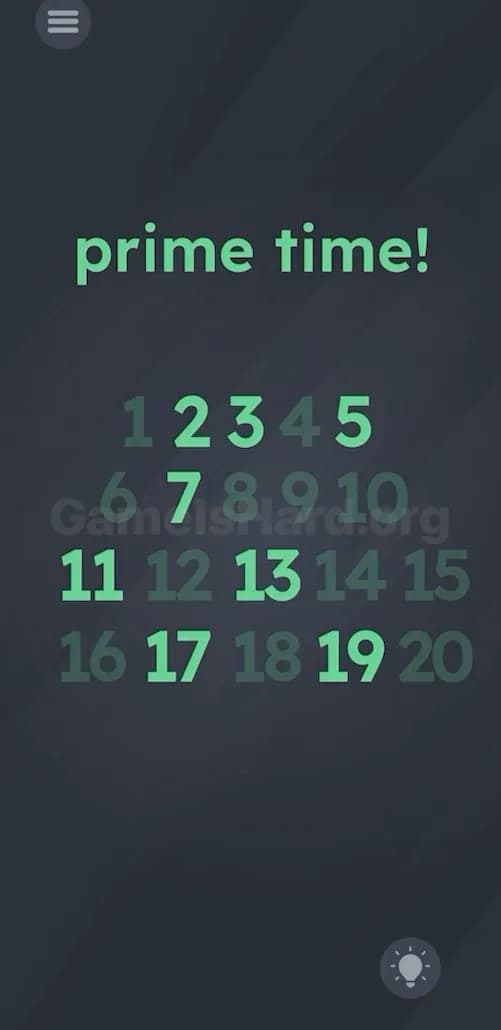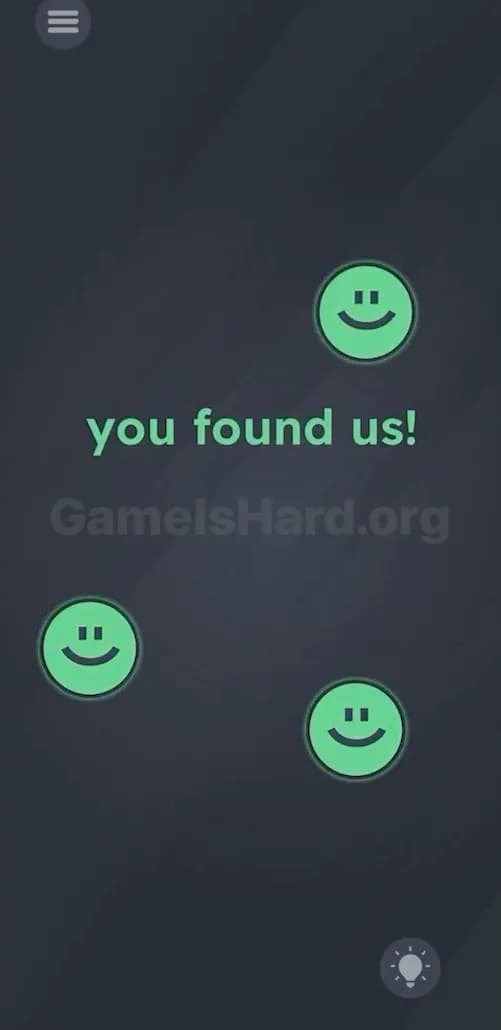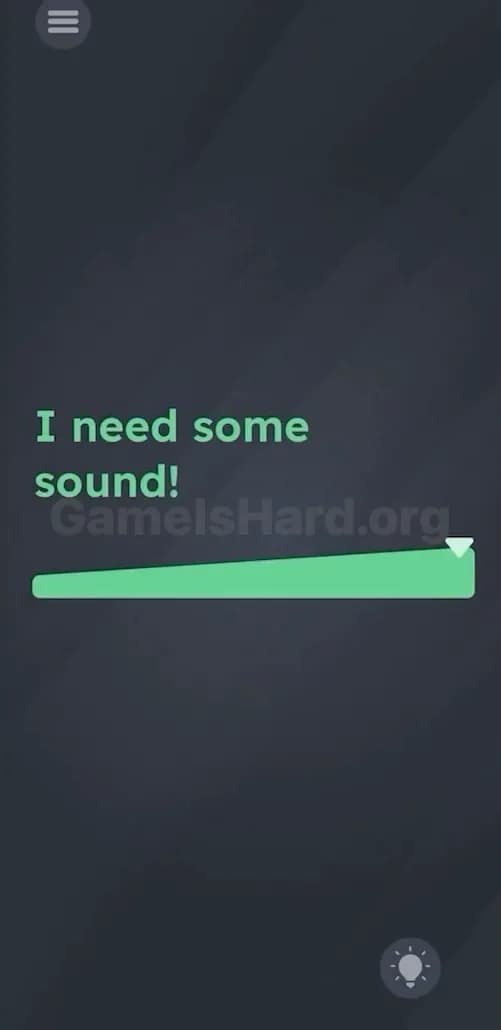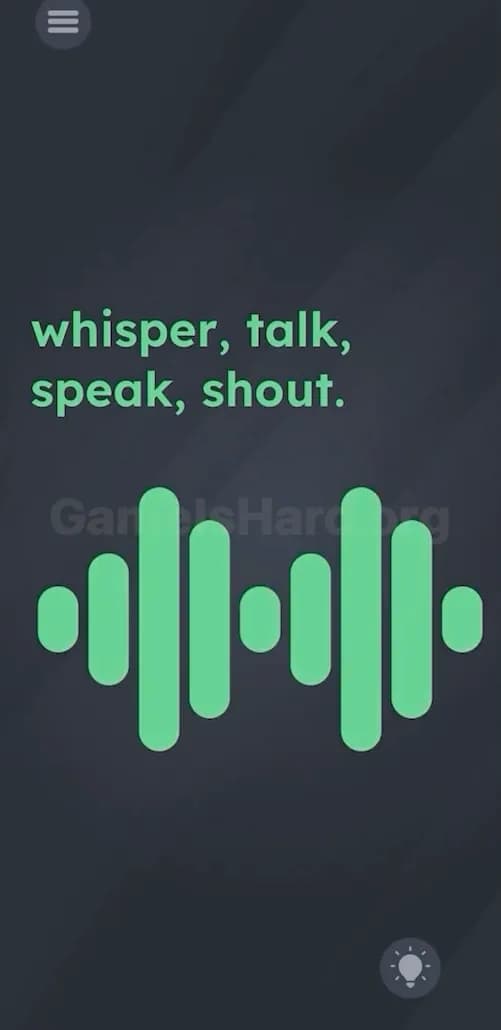
You’re stuck on a level that says “say cheese!”. So you do it. Like an idiot. You literally say “cheese” at your phone.
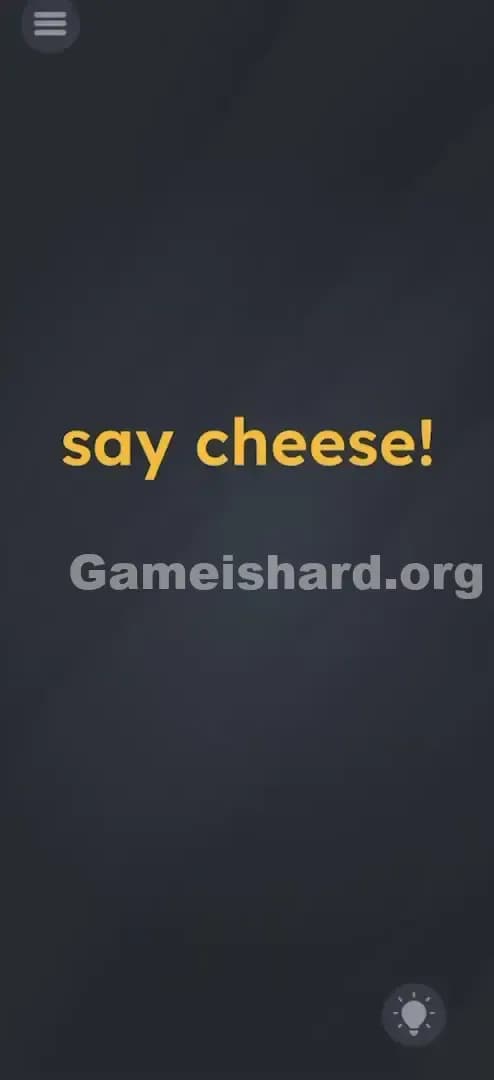
Nothing happens.
You tap the screen. Nothing. You crank your volume. Nothing. You try the camera. Still nothing. Then the “oh come on” hits you. You take a screenshot. The level clears. You feel smart and furious at the exact same time. That’s Game is Hard in one bite: it trains you to mistrust your own instincts, then pays you back with a nasty little grin of satisfaction.
So yeah. Why do we keep playing games that intentionally lie to us?
Because they’re built around a psychological loop that is hard to get anywhere else on a phone screen: frustration that flips into insight.
Most mobile puzzles are polite. They show you the rules, show you the pieces, and the challenge is just doing the obvious thing in the right order.
Game is Hard does the opposite. It runs on a “no rules” rule. Every level can change what matters and what doesn’t, which forces you into constant experimentation.
That’s not difficulty like chess difficulty. It’s difficulty like: “your brain has a habit, and I’m going to punch that habit in the mouth.”
Two big tricks it uses:
That rebuilding is the whole point. It’s not about knowledge. It’s about rewiring your assumptions.
A normal trivia question feels like rummaging through drawers. Either you know it or you don’t. If you get it right, you feel… mildly pleased.
A lateral thinking puzzle is a switch flipping.
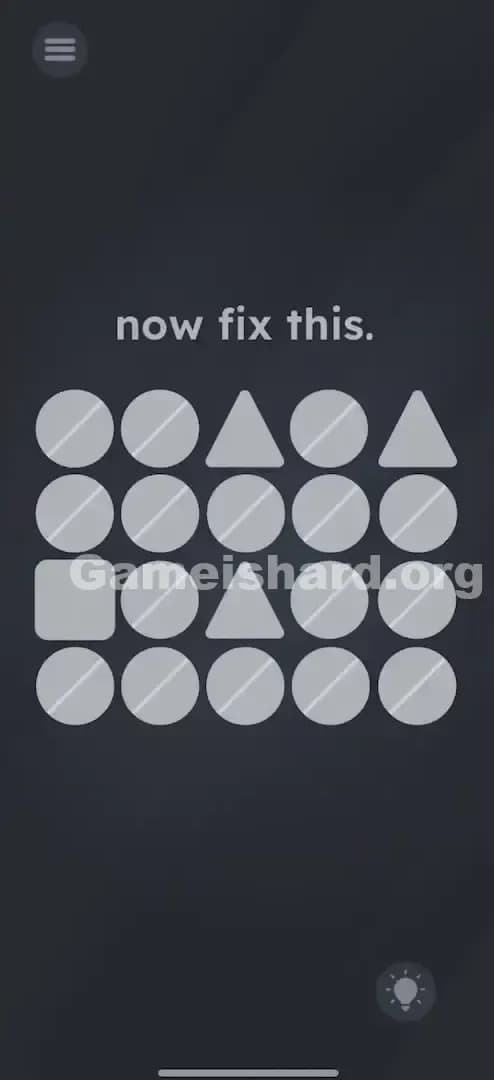
You can be stuck for 10 minutes, then solve it in 1 second. That snap is the reward. The game creates “cognitive friction” (everything feels wrong), then drops you into relief when the new pattern clicks.
That relief isn’t subtle. It’s the brain going: “Ohhhh. I see it now.” Dopamine. Instant.
And because the pain comes first, the payoff feels bigger.
If you’ve played The Impossible Quiz, you already know the vibe: questions that punish literal reading, answers hidden in nonsense, and the constant feeling that the game is laughing at you.
Brain Test and Brain Out took that energy to mobile with drag-the-text, mess-with-the-UI tricks. Unico Studio (the same studio family behind Brain Test) basically refined that style into a cleaner “black box” format with Game is Hard, stripping away the cartoons and leaving the raw trap design.
So if those older games are like prank shows, Game is Hard is more like: “Here’s a plain room. One of the walls is fake. Figure it out.”
Most apps spend years training you to trust UI. Buttons do button things. Counters are just counters. Menus open menus.
Game is Hard treats the interface like physical objects inside the level. The UI isn’t a frame around the puzzle. It is the puzzle.
Concrete examples (the ones that stick in your brain):
The “Menu” button becomes a puzzle piece There’s a level that shows “h w to fix this?” and you need an “o.” The “o” isn’t hidden in the art. It’s the Menu button. You drag it into the gap like it’s a literal letter tile.
The operating system becomes an input “say cheese!” has no shutter button. Because the “camera” is your system screenshot action. The game listens for that OS event.
Numbers stop being math and become shapes A level says “countdown to 0” with a big 10. The trick is dragging the 1 out of the circle so only 0 remains. It’s not arithmetic. It’s typography.
Inaction becomes the move “I need some rest” clears when the phone is perfectly still on a flat surface. No tapping. No swiping. Just stop interfering.
This is why the game feels like it’s “lying.” It isn’t lying. It’s attacking the invisible contract you have with your phone.
Here’s what Game is Hard trains you to do, whether you like it or not:
Treat instruction text as interactive (words can be dragged, deleted, used as objects).
Treat UI chrome like real level geometry (Menu, Hint, Level Counter, pause icons).
Treat your phone like a controller, not a screen:
And once you learn that, other “gotcha” games get easier. You stop asking “what does the level want?” and start asking “what assumption is it trying to break?”
That’s the whole genre. It’s not about being smart. It’s about being slippery.
Troll games walk a tightrope. Too fair and they’re just puzzles. Too unfair and you quit.
Game is Hard survives because:
So the frustration becomes part of the ritual. You get mad. You laugh. You keep going.
When you hit a dead level and your brain starts looping, do this. Fast.
UI Pass (5 seconds): try dragging everything that looks “off-limits”
Hardware Pass (10 seconds): trigger the big sensor suspects
This isn’t a walkthrough. It’s a mindset shortcut. You’re not hunting the answer. You’re hunting the category of trick.
Do that and the genre stops feeling random. It starts feeling like a conversation with a smug designer.
Yeah. Because you come out sharper.
Not in a “200 IQ” way. In a practical way: you start noticing what you normally ignore. You stop autopiloting UI. You read text like it’s suspicious. You pay attention to the frame, not just the picture.
Game is Hard basically trains observation through spite. And weirdly, that’s a pretty good deal.
Now go bully the next level back.